VistaExtract · Hunan Noksoul Biological Technology Co., Ltd. · Ingredient Science series
If you have read the ingredient list of a menopause-support supplement, a bone-health formula or an anti-aging serum in the last five years, you have probably seen genistein. It is one of the most studied plant-derived isoflavones in the nutrition industry — and also one of the most frequently mis-specified, because a powder labelled "isoflavone extract" can mean very different things.
This article explains what genistein actually is, why formulators care about it, and how we at Hunan Noksoul Biological Technology Co., Ltd. (VistaExtract) make it — from the Sophora japonica fruit arriving at our gate in Hongjiang, Hunan, to the drum that leaves with a batch COA. Our genistein has been supplied in volume to customers across Europe, the Americas, Japan, Southeast Asia and South Korea; this is the process behind those shipments.
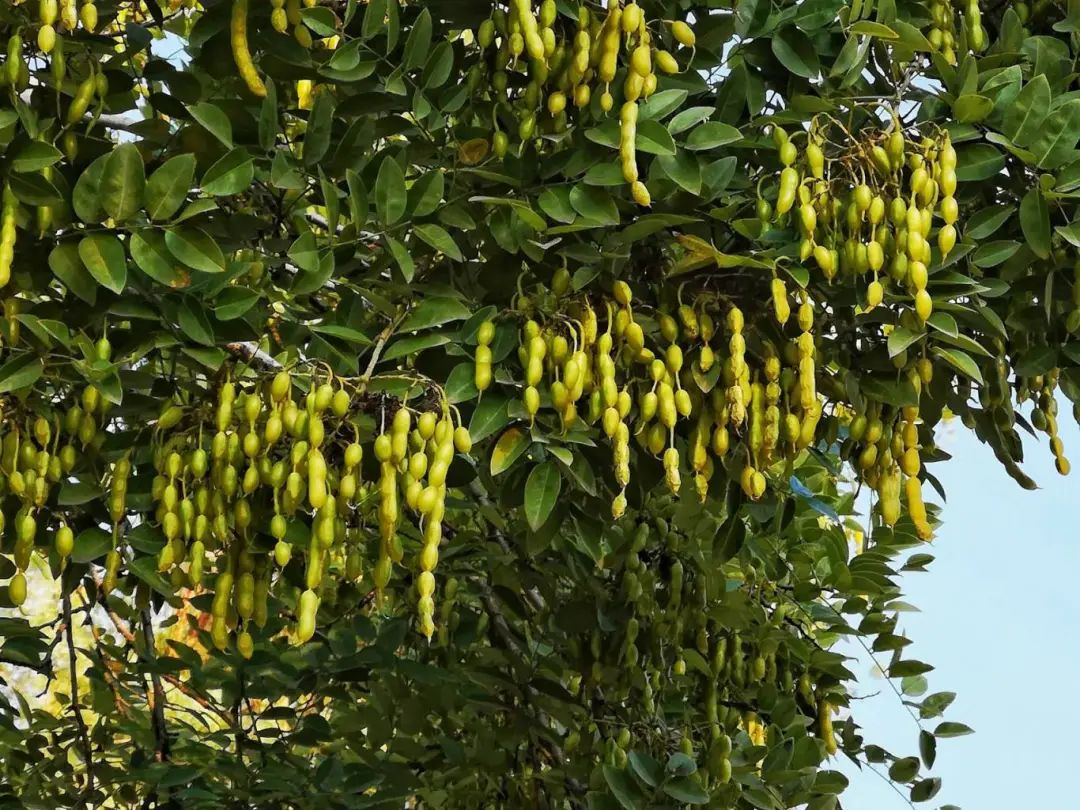
Genistein (CAS 446-72-0, C₁₅H₁₀O₅, molecular weight 270.24) is a natural isoflavone. In the plant it does not exist free — it is mostly bound as glycosides (genistin and related forms) inside the fruit of Sophora japonica, the Chinese scholar tree. Extraction and hydrolysis free the aglycone; further purification brings it to the ≥98% HPLC grade that supplement and cosmetic formulators specify.
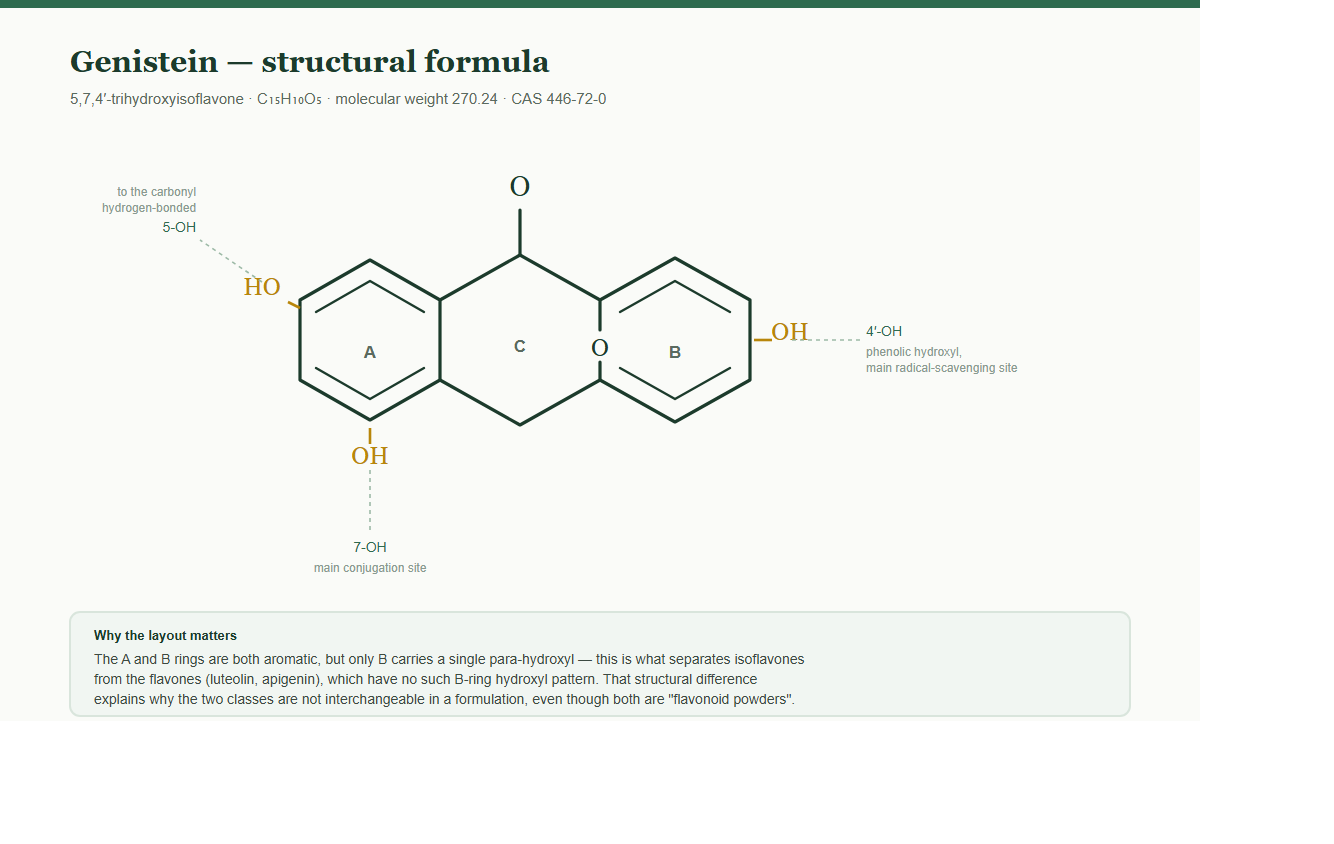
Three hydroxyl groups define the molecule. The 4′-OH on the B ring is the principal radical-scavenging site — the origin of its antioxidant reputation. The 7-OH is the main conjugation site, which is why genistein in the body appears largely as glucuronide metabolites. And the 5-OH, hydrogen-bonded to the neighbouring carbonyl, distinguishes it from its close relative daidzein.
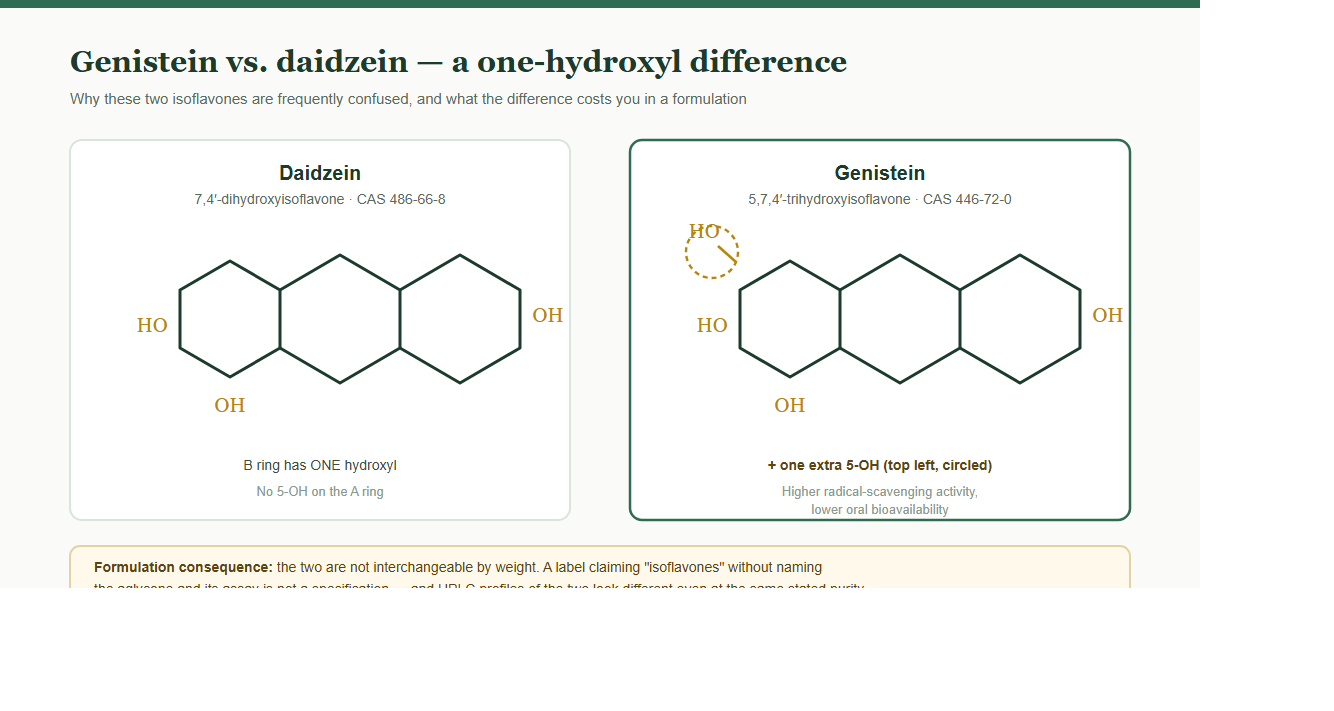
Daidzein and genistein are both soy- and Sophora-derived isoflavone aglycones, and both appear in women's-health formulations. They differ by exactly one hydroxyl — genistein carries an extra 5-OH. That single group gives genistein stronger in-vitro radical-scavenging activity, but also makes it less readily absorbed in glucoside form and more demanding to purify, because the two compounds co-extract and co-elute.
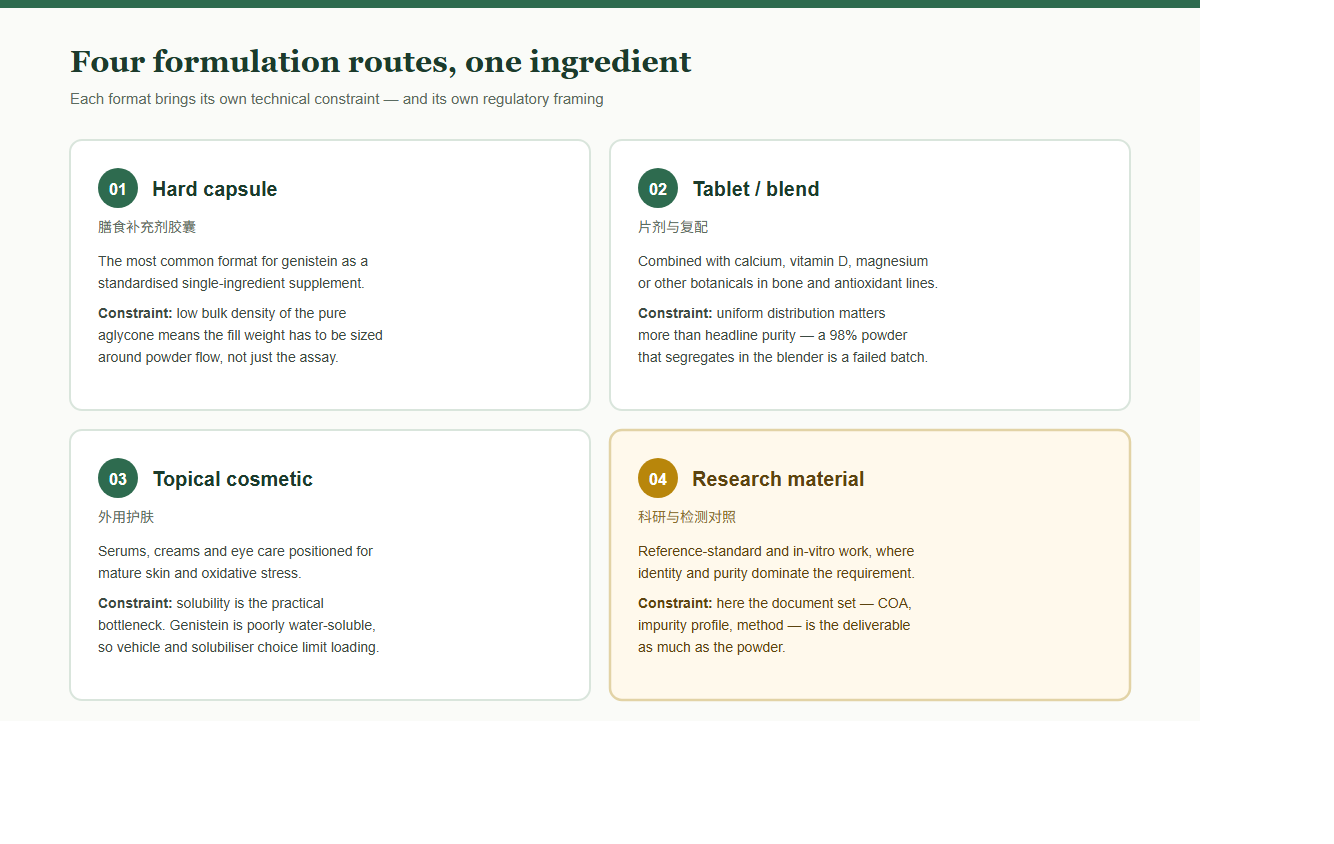
Genistein sits at the intersection of several large categories. To be precise about the science: genistein is a well-studied ingredient, not a proven medicine. The research directions below are the reason it is formulated — they are not claims we make about any finished product.
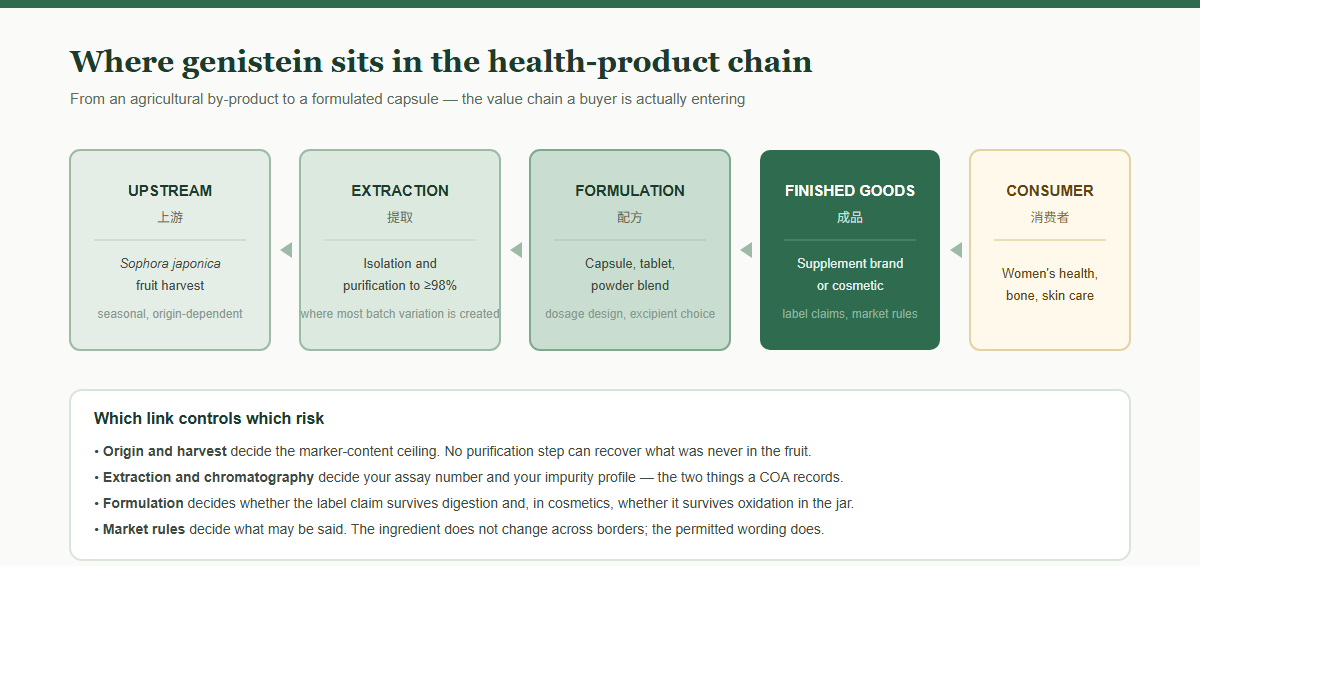
One thing every one of these categories has in common: they are regulated. A supplement brand in Germany, a cosmetic brand in Korea and a functional-food producer in Japan will each frame the same molecule differently. What does not change across those markets is the material itself — and that is where the supplier's process comes in.
Our production base in Zhushan Industrial Park, Hongjiang City, Hunan, runs genistein as a core Sophora japonica line. The process is best understood as six gates — each one exists to protect a specific property of the finished powder.
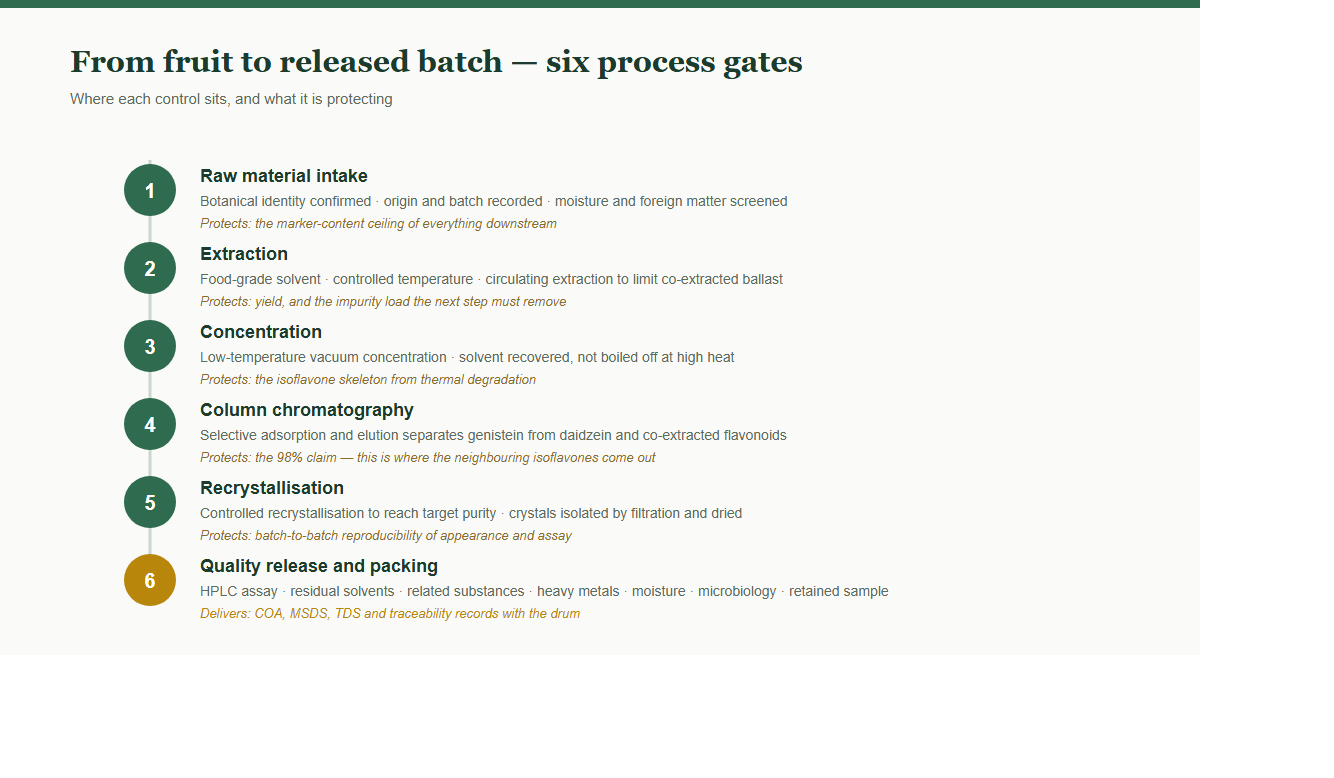
Gate 1 — the fruit. Genistein is only as good as the Sophora japonica fruit it came from. Incoming material is checked for botanical identity, origin, batch, moisture and foreign matter before it is accepted. Marker content varies with origin and harvest; the intake record is what makes a later COA explainable.
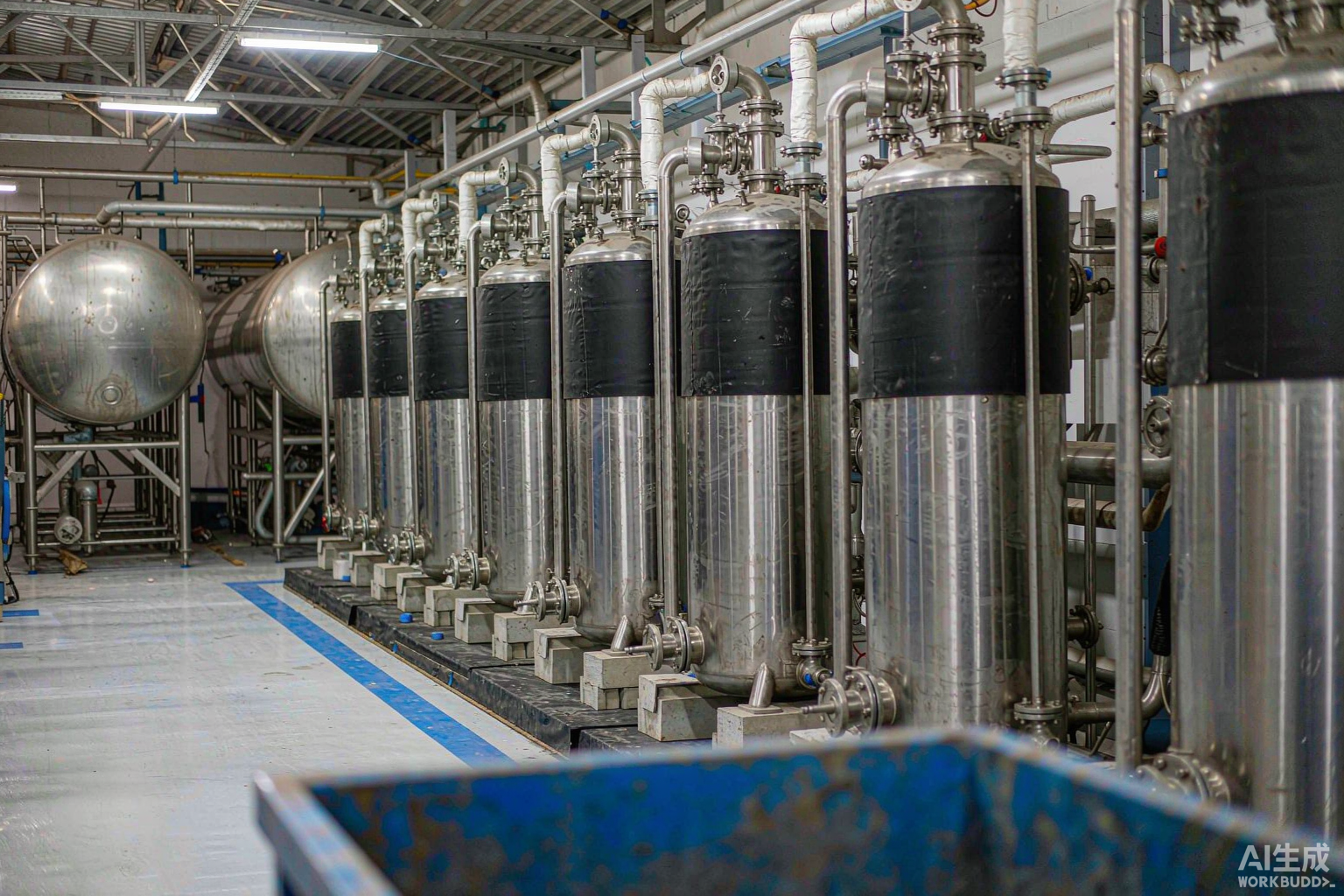
Gates 2–3 — extraction and concentration. Food-grade solvent extraction at controlled temperature, followed by low-temperature vacuum concentration. Running hot at this stage is the classic way to lose assay points before the powder ever reaches a column.
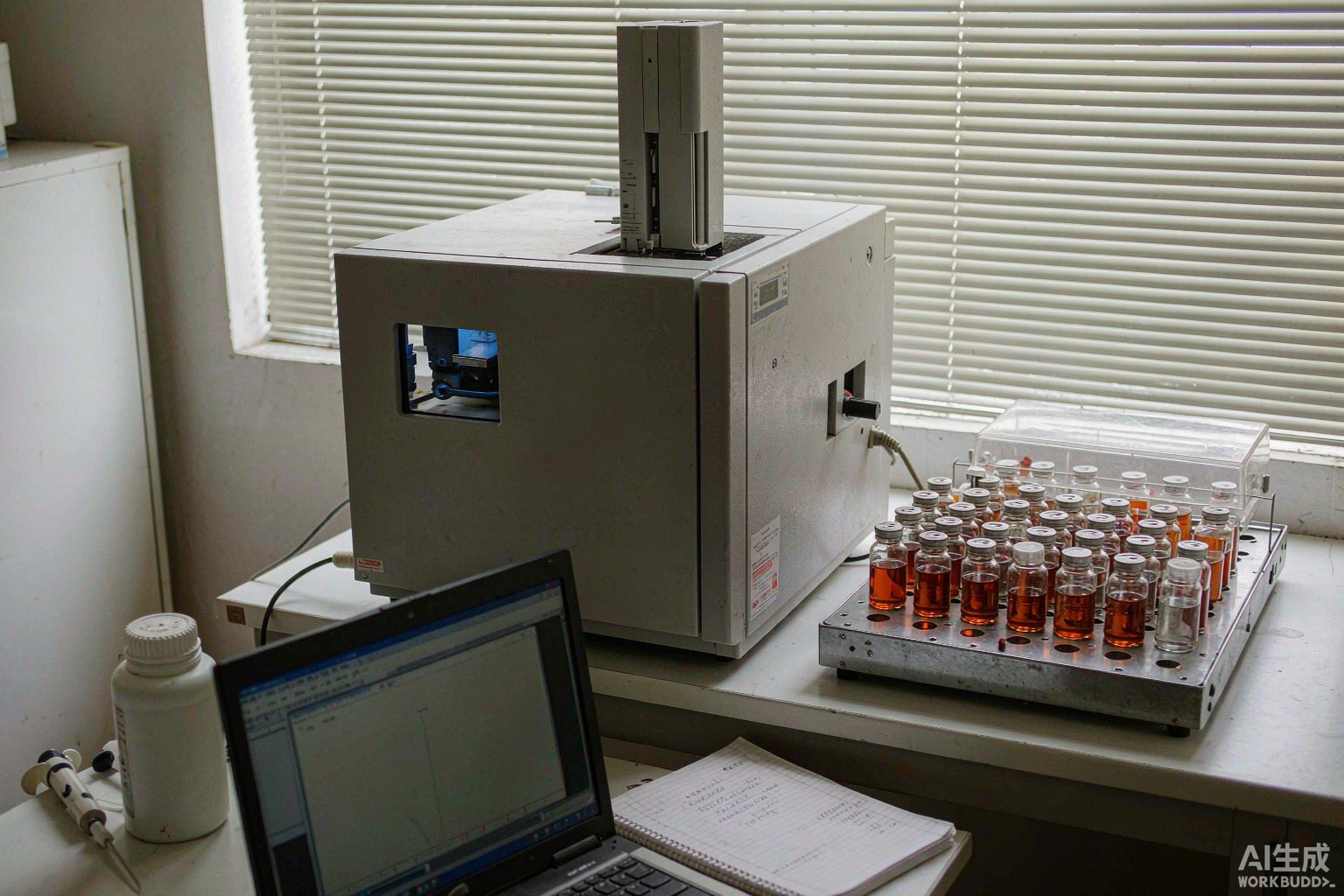
Gate 4 — chromatography. This is the step that defines a 98% product. Genistein, daidzein and the co-extracted flavonoids travel close together; the resin sequence and elution profile are what separate them. Batch records at this step are kept per lot.
Gate 5 — recrystallisation. Controlled recrystallisation to the target purity, filtration and drying. This is where batch-to-batch consistency of appearance and assay is locked in.

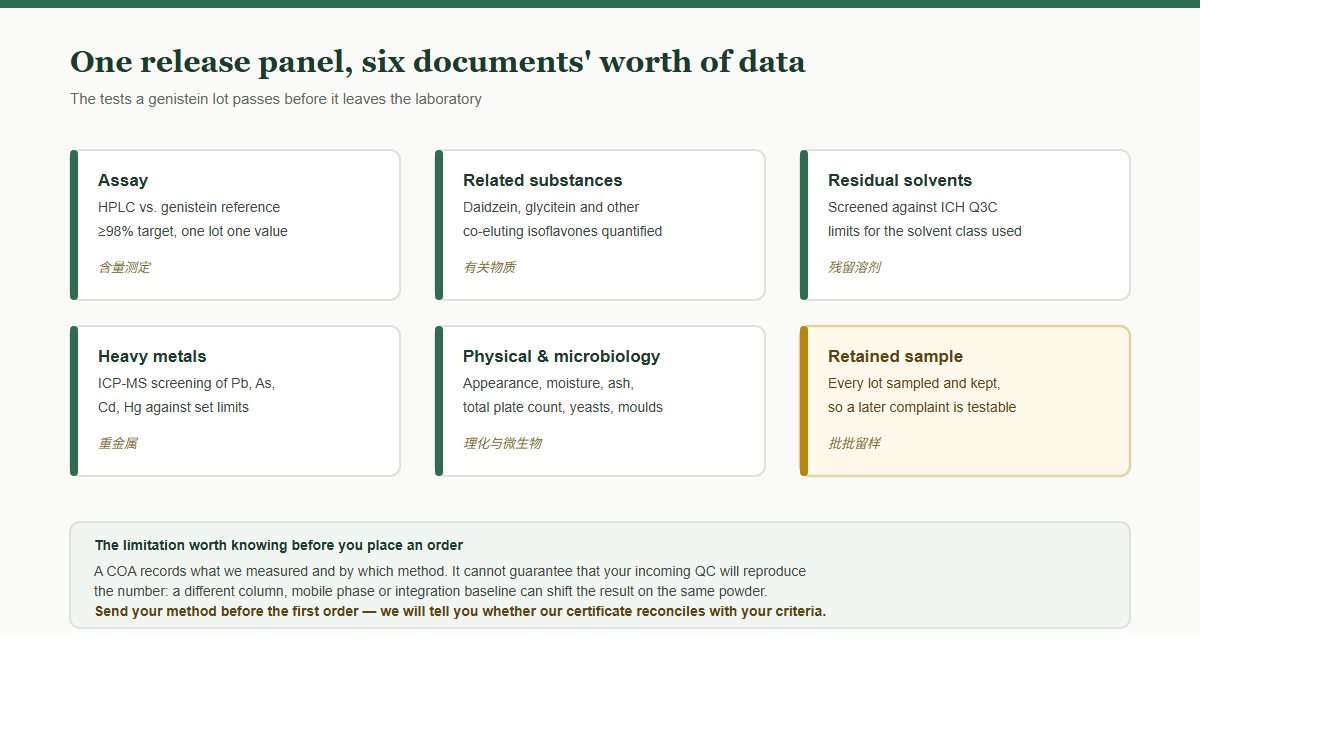
Gate 6 — release. Every lot passes the full panel before packing.
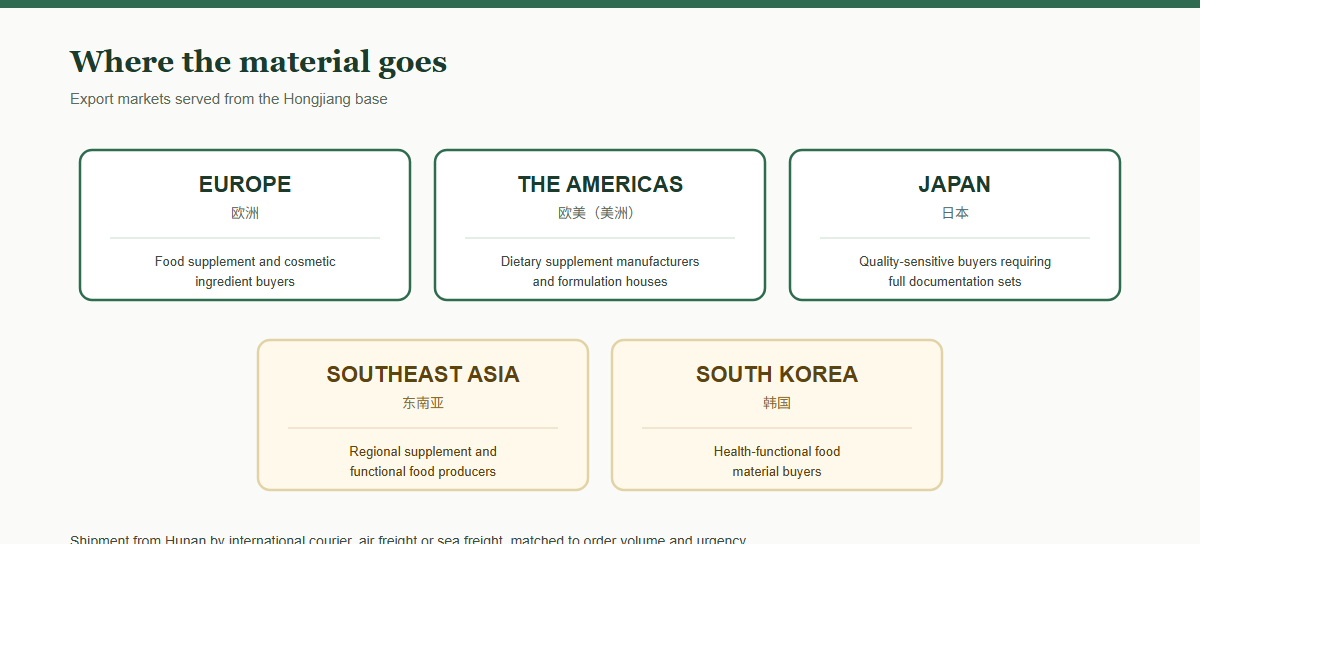
Genistein is one of our most-exported lines. From the Hongjiang base, material has been supplied in ongoing volume to customers in Europe, the Americas, Japan, Southeast Asia and South Korea — a spread that reflects how broadly the women's-health and antioxidant categories have adopted this ingredient. Shipments go by international courier, air freight or sea freight, matched to order volume and urgency.
| Item | Specification |
|---|---|
| Product | Genistein Extract |
| Assay | ≥98% (HPLC) |
| CAS No. | 446-72-0 |
| Appearance | Off-white fine powder |
| Botanical source | Sophora japonica fruit |
| MOQ | 1 kg (samples 10–20 g) |
| Packing | 1 kg aluminium foil bag; 25 kg fibre drum |
| Features | Non-irradiated, GMO-free, TSE/BSE-free, no ETO treatment |
| Certifications | ISO, KOSHER, HALAL |
| Documents | Batch COA, MSDS, TDS, traceability records |
Building 9, Warehouse 2, Zhushan Industrial Park, Qiancheng Town,
Hongjiang City, Huaihua, Hunan, China
湖南省怀化市洪江市黔城镇株山工业园区平房仓2幢(9号栋)
sales@vistaextract.com
For samples, quotations or the full technical document set, write with your target specification and intended application. For custom purity grades or particle-size requirements, include your analytical method.
This article describes an ingredient and its manufacture. It does not constitute medical advice or any efficacy claim for finished products. Genistein is a botanical raw material; applications in food, supplements and cosmetics are subject to the regulations of each destination market. Specifications and delivery terms are as confirmed in writing by both parties.

